

SOLITEX WELDANO-S 3000
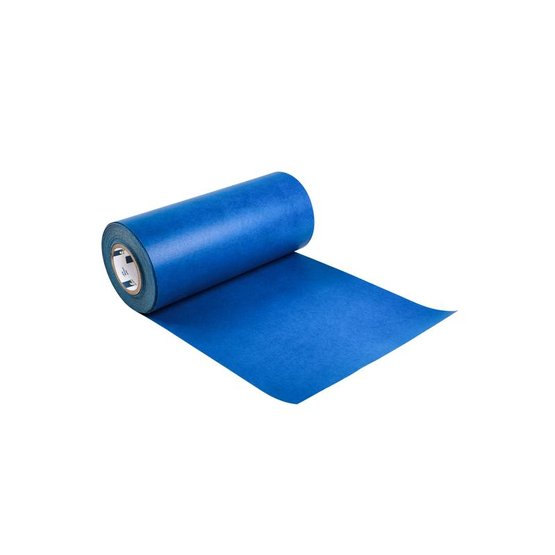
Diffusion-open, weldable roofing underlay membrane strips





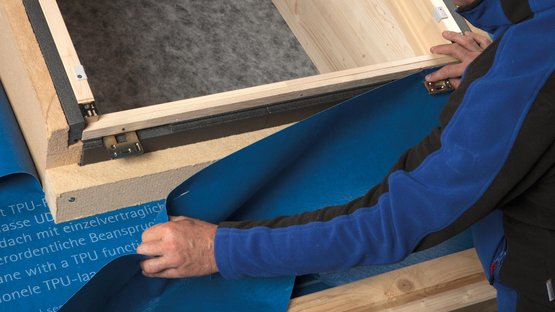

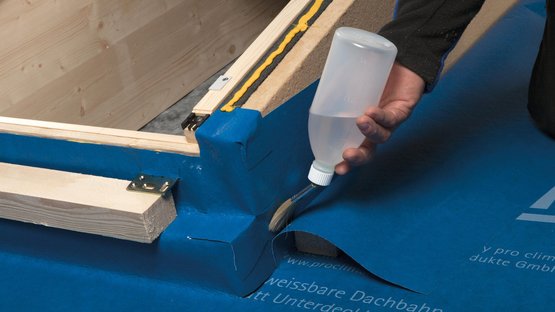
Advantages
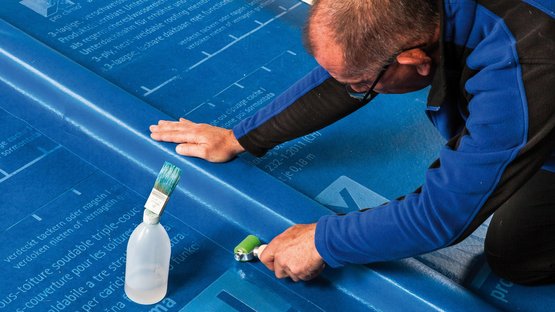
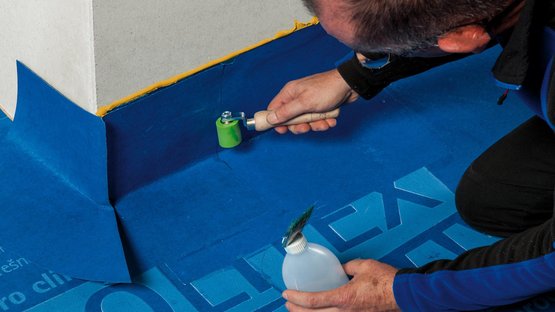
- Reliable seam sealing: homogeneously weldable as part of the SOLITEX WELDANO 3000 system
- Can be used flexibly: also suitable for large counter battens
- Easy to work with: robust with extremely high tear-resistance
- Maximum protection: diffusion-open, rainproof against driving rain, and highest hail-resistance HR 5 (Swiss VKF/AEAI directive) and as per EN 13583
- Can be easily cut to shape using a knife or scissors
Areas of application
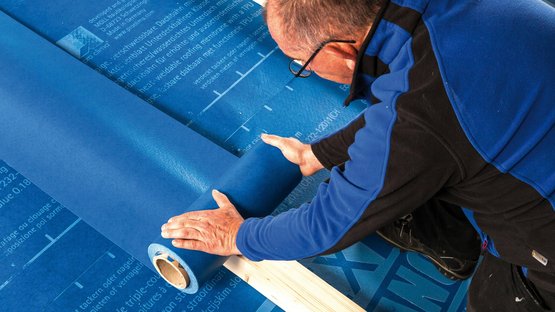
For reliable sealing around counter battens as part of the SOLITEX WELDANO 3000 system.
Planning and construction guidelines
Areas of application
SOLITEX WELDANO 3000 serves as a roofing underlay membrane for demanding conditions and can also be used as a temporary covering.
It stops cold external air from flowing through the insulation structure underneath and ensures that the thermal insulation works in an optimal manner.
Use as a temporary covering
As a result of its highly waterproof properties and excellent robustness, this roofing underlay membrane can be used as a temporary covering to protect the structures underneath against the elements. It has an outdoor exposure period of of up to 6 months in Northern and Central Europe, Canada and the northern United States (ASHRAE Climate Zones 4-8) and up to 4 months in Southern Europe, the rest of the United States (ASHRAE Climate Zones 1-3) and the rest of the world.
Overlaps and joints to adjacent building elements should be finished in accordance with our installation instructions.
No rear ventilation of the insulation layer is necessary
Roofing underlay membranes with high permeability for water vapour make rear ventilation of thermal insulation layers unnecessary. As a result, insulation material can be installed to fill the full depth of the space between the rafters when SOLITEX underlay membranes are used.
In the case of non-insulated attics, it is advisable to provide for ventilation in order to ventilate the attic space. Complicated and frequently ineffective ventilation features at the eaves, ridge, valley, hip and installed roof features are not necessary.
Increased indoor humidity
These permeable membranes allow moisture to dry out of the structure to the outside more easily and more quickly. This is advantageous both during the construction phase and during normal use (if moisture contained in the indoor air penetrates into the structure by diffusion or convection).
As a rule, moisture that arises due to construction work should be able to escape the building structure quickly by ventilation through open windows. Dryers can help to speed up the drying process in wintertime. This helps to avoid permanently high levels of relative humidity.
No ‘tent effect’
Pore-free SOLITEX membranes offer particularly good watertightness against driving rain. The membrane can be installed over the surface of insulation materials or onto the roof sheathing. A tent effect is reliably prevented by the monolithic functional film and the multi-layer structure.
The term ‘tent effect’ describes the phenomenon whereby waterproof tent sheets allow significant amounts of moisture into tents at points where they are in contact with inside objects.
The difference between rainproof and waterproof sub-roofs
Sub-roofs serve as an independent sealing layer underneath the actual roof covering. They are installed as an additional measure to ensure either rainproofing or waterproofing of covered roof structures if the roof pitch is less than the standard roof pitch. Sub-roofs are installed on a subsurface with sufficient load-bearing capacity, e.g. on even sheathing consisting of solid wood or wood-based panels with a pressure resistance of ≥100 kPa (≥14.5 psi) at 10% strain and/or a surface layer with a density of ≥150 kg/m³ (≥ 9.4 lb/ft³).
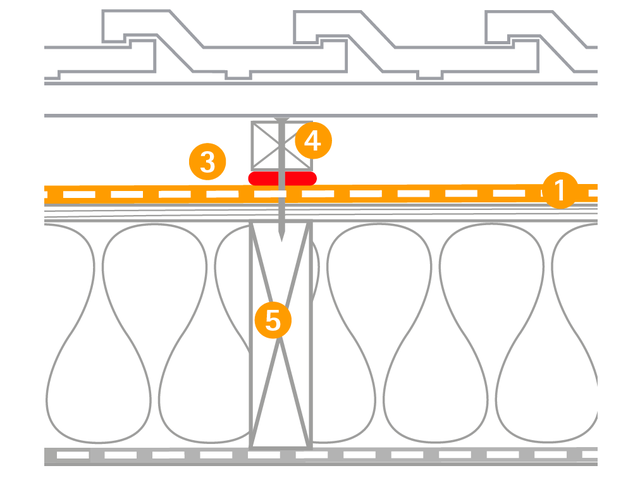
There are two different sealing solutions (see Fig. 1 and Fig. 2) available from pro clima to seal the penetrations caused by nails or screws to ensure that the SOLITEX WELDANO sub-roof system is waterproof: the TESCON NAIDECK mono nail-sealing tape for moderate rain loads, and covering of the counter battens with SOLITEX WELDANO-S 3000 welded strips for high loads. Covering of the counter battens with welded joints is recommended for roof pitches below 10° (2.1:12) to protect the roof structure against penetrating water. Any applicable national or local regulations and standards should be taken into account here. The main difference between these two sealing solutions relates to the position of the counter battens relative to the sealing layer. If a nail-sealing tape is used, the counter battens are installed above the rainproof layer (see Fig. 1).
Any precipitation water that enters must also be drained off in a reliable manner around the counter battens. In the SOLITEX WELDANO 3000 system, this is achieved by installing TESCON NAIDECK mono nail-sealing tape beneath the counter battens.
Fig. 1: Rainproof sub-roof: Counter batten with nail-sealing tape on the seal membrane (Switzerland: standard design for exceptional loads)
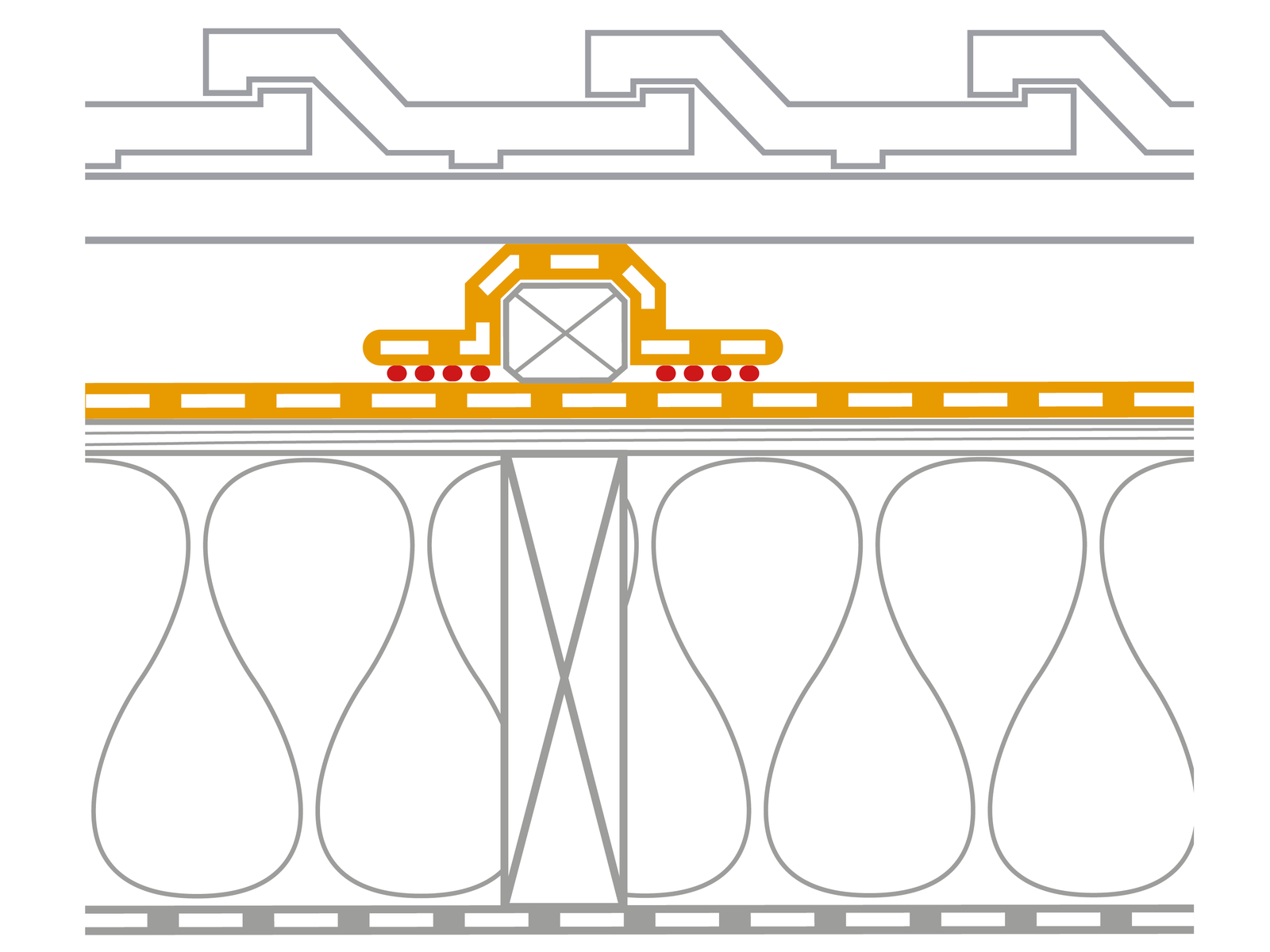
In the case of waterproof sub-roofs, the counter battens are also integrated into the sealing, e.g. by installing the surface roofing underlay membrane over the counter battens. With regard to installation, however, it is often easier to first install the membrane flat on the sheathing, and then to fasten the counter battens and weld a SOLITEX WELDANO-S 3000 sealing strip over them, see Fig. 2.
Important: The counter battens must be dry and chamfered on their upper side (≥ 3 mm (⅛″)) when they are installed. Ideally, kiln-dried battens should be used.
When SOLITEX WELDANO-S 3000 strips are used, the number of attachment nails or screws used to attach the horizontal roof battens should be kept to a minimum. The number of penetrations should also be kept to the minimum necessary. The joints with the penetrating components must then be sealed/welded at a sufficient height above the sub-roof underlay membrane in a waterproof manner, in accordance with the regulations.
Openings in the ridge area are not permitted on waterproof sub-roofs. In contrast, openings in the ridge area can be included on rainproof sub-roof if an appropriate design structure is implemented.
Rainproof and waterproof sub-roof can be implemented in a practical, reliable manner using the SOLITEX WELDANO 3000 system.
Fig. 2: Waterproof sub-roof: Counter batten integrated into the sealing layer (Switzerland: possible additional measure)
Approvals and material composition
The SOLITEX WELDANO 3000 roofing underlay membrane has TPU functional layers on its upper and lower faces.
This underlay been tested in accordance with the requirements of EN 13859-1. It has the CE label.
Technical support
If you have questions relating to planning and installation, please contact pro clima Technical Support.










pro clima on the outside ... and it's a wrap!


Weathertightness with pro clima
Find out more about pro clima's system solutions and products for sealing your building envelope on the outside - with roofing underlay membranes, breather membranes for facades, protective membranes for timber structures during the construction phase, and a full range of sealing tapes, sealants and accessories.